
With another unpredictable school year winding to a close, thinking about lesson planning for a new school year might be the last thing many teachers want to do right now, and understandably so. Educators have poured themselves into their work and their students over the past couple of years at a level unlike many of us have seen before. And as the saying goes, “You can’t pour from an empty cup.”
So, before the 2022-2023 school year begins, new and veteran teachers alike need to take time to refill that proverbial cup. That means making room for the things that bring you joy and feed your soul outside of teaching, and it means setting aside time for the kind of intentional lesson planning that will make you feel confident and prepared throughout the entire school year. Like Warren Buffett once said:
“Someone’s sitting in the shade today because someone planted a tree a long time ago.”
Pandemic-related disruptions in learning likely mean that the students coming to you next year might be at very different stages of mastery and engagement. Don’t worry. By designing lesson plans and learning units with differentiation, autonomy, and the learner at the center, you’ll be equipped to meet each student where they are, set them on a path toward mastery, and accelerate learning along the way.
Lesson Planning for Differentiation
The value of scaffolding standards and differentiating learning is no secret in public education. But without the right tools, proactively integrating those practices into lesson planning can feel like an overwhelming task.
With the right planning tools, however, teachers can easily break down standards and skills into clearly defined levels and identify the student resources for mastering each level. Following a lesson or unit pre-assessment, teachers can then pinpoint each student’s starting point on the path toward mastery and populate a student-facing, growth-focused learning plan with the appropriate learning activities. This practice gives teachers and students alike the freedom to set goals, create and follow personalized learning plans, and assess (and celebrate!) progress.
Free Resource: 4 Steps for Leveling Standards
Often left as an afterthought, scaffolding standards and differentiating learning up front matters for accelerating student learning and for teachers’ well-being throughout the year. Beginning each learning unit with the right goals, expectations, and resources sets your students up to succeed. And when you plan your lessons this clearly, you can be confident that your classroom will take any unexpected detours your district encounters during the year in stride.
RELATED: How to Proactively Plan for True Differentiation
Lesson Planning for Autonomy
A key component of effective lesson planning is maximizing classroom instructional time by way of learner autonomy. This means providing each student with activities, resources, and clear direction so that they are not waiting on the teacher for instructions on what to do next. By scaffolding standards and learning resources during your lesson planning process, conducting pre-assessments at the beginning of each unit, and deploying differentiated learning plans, you’ll make it easy for your students to know where to start and what to do next on their individualized path toward mastery.
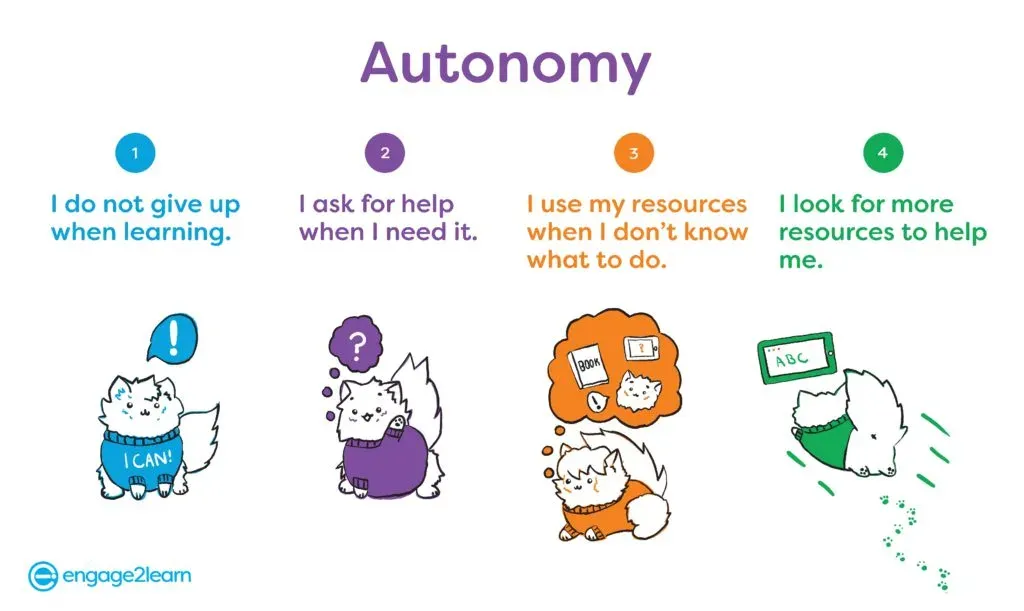
Planning for autonomy keeps the learner experience consistent, especially since the possibility of a surge in COVID-19 cases still looms. When you plan for learner autonomy, however, a disruption in the learning environment does not have to mean a disruption in learning. This includes implementing the use of a blended learning tool that keeps your students on the path toward mastery, whether they’re in the classroom or at home.
Blended learning tools should incorporate scaffolded standards, differentiated instruction, and leveled resources with the kind of technology that kids enjoy using. Unit should begin with a pre-assessment to determine at which level each student should begin. From there, students complete engaging learning activities and gradually move toward mastery.
RELATED: The Problem with Teaching to the Middle
Lesson Planning for the Learner
As educators, especially over the past few years, we’ve seen just how resilient our students really are. We firmly believe that our students shouldn’t have to be this resilient, though we admittedly don’t have much say in the matter. What we can do is make learning easy, accessible, and engaging by designing lessons that center around empathy for our students.
Rather than slipping into the habit of lesson planning strictly to meet standards, which can make connecting to and engaging with the material difficult for learners, we can incorporate methods like culturally relevant teaching (CRT) and social-emotional learning (SEL) to connect units to our students’ lived experiences.
For some, CRT and SEL might just sound like buzzwords. For students, these teaching approaches help make the classroom a safe and fun space that supports accelerated learning and achievement for every single student.
- Culturally relevant teaching (CRT) is a tool for bridging the gap between classroom material and a learner’s culture, values, language, and life experiences.
- Social-emotional learning (SEL) is a tool for developing and integrating into learning the kind of “soft skills” that we all need to thrive in our studies, work, and relationships, such as social awareness, self-management, and responsible decision-making.
Used together, these practices can turn a traditional learning environment that leaves some students disengaged into one that encourages expression, creativity, and critical thinking for all.
The role of the teacher is of course to lead and guide students through their learning. With that role comes the responsibility of remaining curious about and open to what each student really needs to thrive inside and outside of the classroom. Lesson planning around your students’ cultures, realities, dreams, and what we call Life-Ready Skills will create the kind of classroom environment that will keep your students engaged and eager to learn.
Planting the Learning Seeds
We know full well that we can’t predict exactly what will happen in the 2022-2023 school year. We also know that we should plan for and give our students the tools to succeed anyway. By using a tool like the Buerk Rubric to level standards and lesson plan for differentiation, autonomy, and the learner, you will plant the learning seeds that will grow strong and tall throughout the year.
To learn more about how you can maximize student learning and achievement, start a partnership today!
First published April 8, 2022, by Kammi Green.