
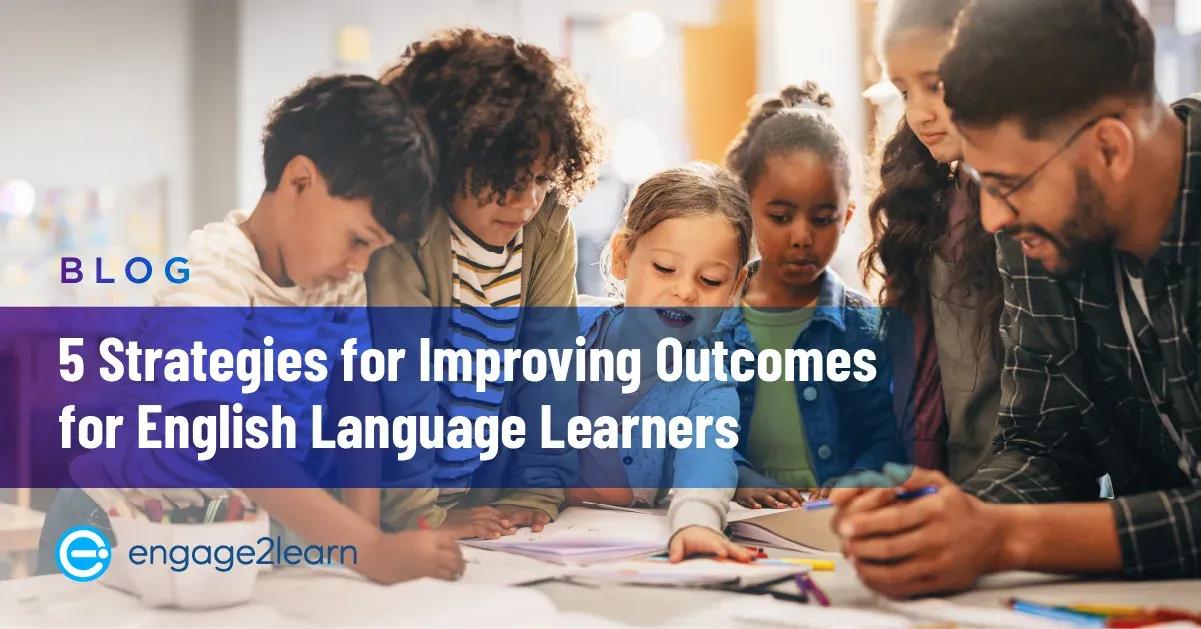
English language learners (ELLs) are the fastest-growing student population in public schools across the country, and that growth is a reason for schools to change how they teach. Every student, whatever their first language, deserves equitable access to a quality education, and that matters for the success of ELLs and for the health of our public schools and communities.
When schools and districts prioritize and invest in support for ELLs, they build an inclusive environment that benefits all students and promotes cultural understanding. Principals and district-level administrators have to lead with new strategies that raise learning outcomes for ELLs, which improves school for every student.
Why ELL Support Needs to Be a Priority
The growing population of ELLs means that educators must find the balance between accommodating a richer cultural diversity in the classroom and addressing ELLs’ unique learning needs. That takes equitable policies and standards, and it takes practical, on-the-ground strategies that change the learning environment for ELLs and their peers.
01: Use Multilingual Resources and Varied Instruction
An effective strategy for ELLs involves integrating culturally relevant, real-world content into the classroom to build a multilingual, multicultural environment. This approach both supports English language acquisition and helps teachers acknowledge and celebrate their students’ cultural backgrounds. For example, incorporating activities around news articles from students’ home countries, world music and art, diverse literature, and bilingual/dual language education models can significantly enrich learning and engagement for ELLs and their English-speaking peers alike.
The challenge lies in the careful selection and consistent integration of these resources to ensure they align with the diverse cultural and linguistic backgrounds of students. Administrators can facilitate this by regularly surveying families to get a clear picture of their students’ linguistic and cultural backgrounds, support curriculum design that is inclusive and representative of those backgrounds, and promote a richer, more engaging educational environment.
02: Prioritize Professional Development for Educators
Implementing job-embedded professional development tailored for teachers of English language learners is critical, especially since many mainstream training programs don’t require teachers to be prepared to instruct ELLs. To fill this gap and provide educators with the support that they need, training should be differentiated and ongoing, integrate cultural competence and the effective use of digital tools that bring diverse content into the classroom, and center around ELL-specific competencies.
A real-world example of this is currently in progress in Providence Public Schools, whose leaders partnered with engage2learn to create and implement a coaching and growth plan designed to help teachers effectively instruct ELLs. To support this plan, engage2learn and the district collaborated on designing a Multilingual Learners (MLL) Best Practices Rubric composed of leveled, MLL-specific competencies, including language proficiency, vocabulary development, and differentiation and scaffolding.
This approach has helped Providence teachers grow in their skills, build strategies for ELLs into their everyday teaching, and improve student outcomes. You can read more about this ELL-focused partnership here.
03: Implement Targeted Learning & Assessment Tools
Leveled learning rubrics and specific assessment tools are how teachers track and speed up English learners’ progress. With these rubrics, teachers can help students engage in self-assessment to identify their own starting points in any given lesson or standard. From there, teachers can assign level-specific activities to help students grow from where they are, rather than teaching to the middle.
Teachers can then use targeted assessment tools that are designed to accurately measure student progress and language acquisition, which gives them the data to tailor instruction further. For example, district leaders can implement regular assessments that gauge both language proficiency and students’ understanding of the subject matter, allowing for timely interventions and support where needed.
04: Promote Cultural and Linguistic Inclusivity in School Policies
Creating an inclusive school culture that values and builds on the linguistic diversity of the student body is essential. This involves crafting policies that support cultural diversity and inclusive practices that recognize multiculturalism and multilingualism as things to be welcomed, celebrated, and accommodated.
While the benefits of such policies are numerous, implementing them with fidelity can be a challenge. Administrators should introduce these policies while making room for teachers and staff to have their concerns heard and their questions answered. School and district leaders can then lead by example, treating diversity and inclusion as strengths that improve the learning environment for all students.
05: Use an Advanced Data Analytics Platform to Guide ELL Support
An adaptive educator support platform like engage2learn’s GroweLab helps educators and leaders know that their ongoing commitment to improving the learner experience for ELLs is actually having an impact. By using GroweLab’s user-friendly data dashboard, leaders can monitor, measure, and correlate student achievement and educator growth data, making it easier to identify patterns, successes, and areas for improvement.
A tool like GroweLab shows educator effectiveness and student achievement in real time, so interventions can come quickly and address the specific needs and challenges of ELLs. With an advanced data-informed approach like this, leaders make sure the support educators receive is effective and keeps pace with ELLs’ changing needs, which improves language proficiency and academic outcomes.
Putting the Five Strategies to Work
Meeting the needs of English language learners and improving their outcomes is complex work, and it cannot wait. By using diverse instructional resources, prioritizing targeted teacher support, implementing leveled learning and assessment tools, promoting inclusive policies, and adopting an advanced education data analytics platform, school and district leaders have the makings for a successful ELL student population.
As we keep meeting these challenges, we need strategies that address the immediate needs of English language learners and their English-speaking peers and also prepare all students for long-term success in school and beyond.
You can find more ELL-focused insights, support strategies, and success stories here or by reaching out to engage2learn.
First published May 30, 2024.