Instructional Coaching InstitutesWhere great coaching starts.
Over five days, Jim Knight’s institutes build the beliefs, skills and knowledge of instructional coaching through the Seven Success Factors, including the Partnership Principles and the Impact Cycle. They are the foundation the Coaches Academy builds on, offered nationally in person and virtually.
Seven Success Factors, then everything built on them.
Scroll to build the foundation the way the institute does, from the partnership between coach and teacher up to the program around them.
- Success factor · Partnership
The Partnership Principles.
Equality, choice, voice, reflection, dialogue, praxis and reciprocity: the beliefs that make coaching a partnership teachers choose, and how a coach and a teacher work as equals.
- Success factor · The coaching process
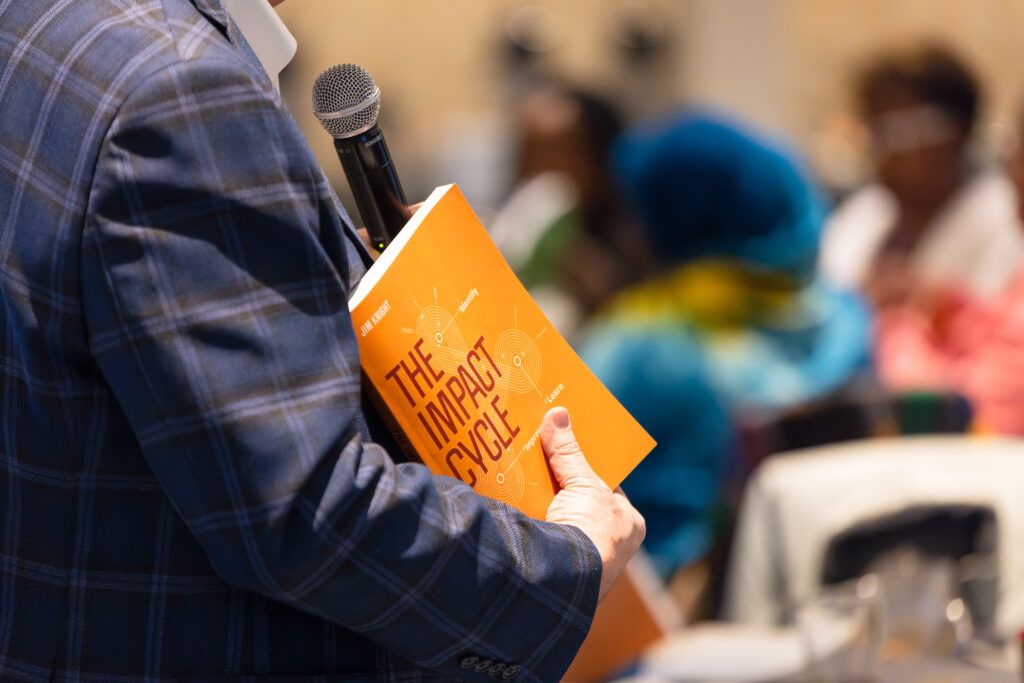
The Impact Cycle: identify, learn, improve.
The cycle a coach and teacher run together: identify a clear goal from what is happening in the classroom, learn a strategy to reach it, and improve until the goal is met.
- Success factors · The program around the coach
The other five factors.
Communication, leadership, data, the instructional playbook and system support: the conditions that let good coaching last.
- What builds on it
Then the Coaches Academy.
Coaches come back inspired and knowledgeable. The Coaches Academy turns that foundation into everyday practice in your schools, through shadowing, calibration and growth data.
Built on Jim Knight’s 30 years of instructional coaching research.
In the room, or from your own.
Same foundation either way. Pick the one that fits your coaches’ calendar and your travel budget.
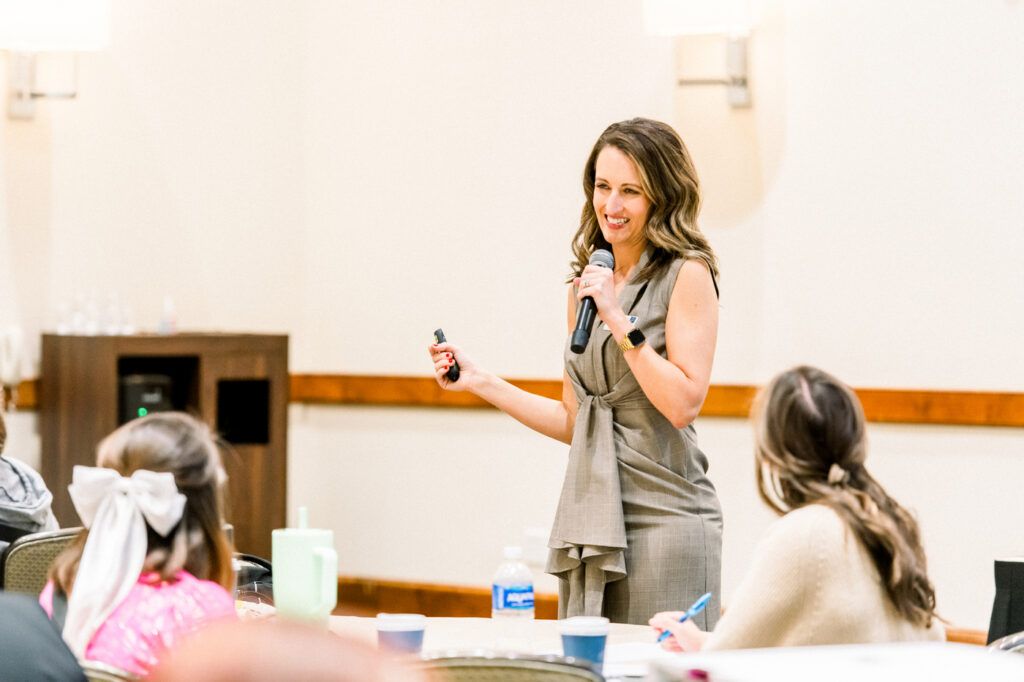
Learn it in a room full of coaches.
Coaches from many districts practice the conversations together, face to face, with facilitators from the Instructional Coaching Group.
- Practice with coaches from other districts
- Time away from the building to focus
- Offered at locations nationally
The same foundation, live online.
Coaches join from their own building or home, with live sessions and time to practice, and no travel.
- No travel, no time lost on the road
- Easier to send a whole coaching team
- Live sessions with time to practice
Learned alongside the people doing the work.
Jim Knight is widely regarded as the founding father of instructional coaching. His research began in 1996.
Over 150,000 instructional coaches have been trained through Jim Knight and the Instructional Coaching Group.
For more than three decades, I’ve had the privilege of learning alongside remarkable coaches, teachers, and school leaders whose ideas and commitment have shaped everything we do.
The institute is the start.
- This page Foundation
Instructional Coaching Institute
The beliefs, skills and knowledge of instructional coaching.
- Practice
Coaches Academy
The foundation, turned into everyday coaching in your schools.
- Community
Jim Knight Impact Network
Monthly workshops with Jim Knight and peers in your own role.
Where coaches join the community.
The institutes sit in the community step of the cycle: coaches learning the foundation alongside coaches from other districts, before the coaching in their own schools builds on it.
- 01
Diagnose
The Coaching System Assessment assesses the coaching program against the Seven Success Factors.
Assessments & Software - 02
Design
The Coaching System Design builds the structures and routines around the coaches.
Planning & Design - 03
Coach
Coaches build their practice through the Coaches Academy, inside your schools.
Performance Improvement - You are here 04
Connect to community
Coaches learn the foundation at an institute, alongside coaches from other districts.
Network & Events
Questions leaders ask.
Who should attend an Instructional Coaching Institute?
Instructional coaches, new and experienced, and the leaders who supervise them. The institute builds the beliefs, skills and knowledge of instructional coaching from the ground up.
Can I attend in person or virtually?
Yes, either. The institutes are offered nationally in person and virtually, and both take coaches through the Seven Success Factors, including the Partnership Principles and the Impact Cycle.
How do the institutes connect to the Coaches Academy?
The institute builds the foundation, and the Coaches Academy builds on it. The Academy turns what coaches learned into daily practice in their own schools through shadowing, calibration and growth-data analysis.
Where do I find dates?
Dates for in-person and virtual institutes are on the Events Calendar. To plan an institute for a district’s coaching team, book a conversation with engage2learn.
Give your coaches the foundation.
Tell us how many coaches you have and where they are in their work, and we’ll recommend an institute, and what should follow it.